Georges Hébert - Develar Histórico
Español
Georges Hébert - Historia
Para entender la Methode Naturelle, es útil para entender el hombre que lo creó, a través de hacerlo es posible comprender mejor por qué lo creó.
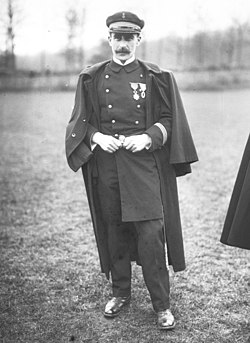
Georges Hébert nació en París el 27 de abril de 1875, este niño cuyo destino nadie podía prever, ni imaginar la influencia que tendría en el campo de la educación física. A la edad de 18 años, entró en la escuela naval y rápidamente se convirtió en un oficial de la marina francesa. Navegando por los buques, que admiraba la fuerza, la flexibilidad y la resistencia física de los Gabiers (gente de mar que trabaja en alto en barcos), los atletas reales que se mueven en las cuerdas y en alto.
Dentro de los marines, Hébert cruzó los océanos y visitó a partes distantes del mundo donde nativos vivían una existencia primitiva. Fueron construidos físicamente bien, saludable y de una condición física radiante.Hébert se dio cuenta de que estas tribus debían su forma para el ejercicio físico diario que se practican mediante la realización de los movimientos naturales necesarios para su subsistencia: correr, saltar, lanzar, llevando, natación, etc.
Fue testigo de algunas revoluciones en América del Sur, así como la insurrección cubana, eventos que pusieron de manifiesto la actitud y el comportamiento de los hombres que se enfrentan a situaciones difíciles.
El 8 de mayo 1902, el volcán de la montaña pelada entró en erupción, Hébert, estaba a bordo del "SUGHET" que estaba anclado en Fort, Francia. Durante la erupción que destruyó la ciudad de San Pedro de la Martinique participó en el rescate de supervivientes (40.000 personas fueron enterradas bajo los escombros y la lava en minutos), una vez más, se dio cuenta de la importancia de la condición física y la fuerza de carácter, esencial para ser capaz de actuar de manera eficiente en tales situaciones.
Convertirse en un atleta y preocupado por la educación física, G.Hébert emprendió el estudio de un plan de reforma de la educación de la gimnasia en la Armada. En 1903, fue nombrado a la escuela de los fusileros marinos de Lorient para poner en práctica sus ideas. A partir de 1904, se le autoriza a aplicar sus principios a un grupo de 1.200 hombres y, en 1905, se introdujo el uso de los "datos citados", basado en cinco pruebas, que permitió la determinación de la progresión de los resultados del Método Natural . En 1909, Hébert se hizo responsable de su aplicación a todos los servicios de la Armada. Mientras tanto, él mejoró y se introdujo el concepto de trabajo por "ondas", los principios de la libertad individual en el trabajo colectivo y la alternancia de esfuerzo extenuante y moderada. Dio manifestaciones en las principales ciudades de Francia y presentó los resultados de 350 marineros en el Congreso Internacional de Educación Física de París en 1913.
El público, maestros y periodistas fueron ganados. De su éxito que fue capaz de crear un Instituto de Educación Física para enseñar el método. Pronto, Hébert se convirtió en el director de la escuela secundaria de los Atletas de Reims, creada con el apoyo del marqués de Polignac.
¡1914! estalla la guerra. Mientras que un primer teniente Hébert 's resultó gravemente herido en Dixmude que lleva una empresa de fusileros marinos. El evento fue mencionado en los despachos del ejército.Después de una larga recuperación de sus heridas (que casi perdió el uso de un brazo), fue puesto a cargo de la preparación física de los soldados. Sede reconocieron las "enormes ventajas de Héberts el método". Al final de la guerra, en 1918, la escuela secundaria de los atletas de Reims estaba en ruinas por lo Hébert orienta su acción hacia la educación física de los niños y las mujeres mediante la creación de escuelas de gimnasia para ayudarlos. Pero la juventud de la posguerra soñó sólo alrededor de las gafas, sobre los partidos y sobre los registros, en detrimento de la educación física útil. Esta mentalidad causó Hébert deciden llevar una campaña en contra de los deportes comercializados y mal organizadas. Publicó un artículo titulado "El deporte contra la educación física", que creó para él oposición y problemas en la prensa deportiva.
Hébert desarrolló los principios del Método Natural en varios libros publicados a partir de 1936 "La educación física y moral viril con el método natural". Aunque no es perfecto, el método natural progresa y centros Hébertiste se crean poco a poco por todas partes en Francia.
La segunda guerra mundial comenzó en el año 1940 (1939). El Gobierno del mariscal Pétain adoptó Méthode Naturelle para la educación física de los jóvenes y lo modificó. Hébert juzgó que estas modificaciones alteran su filosofía. Se publicó un folleto en el que se distanció de la # colaboradores y sus principios de la educación.
1955 celebra el quincuagésimo cumpleaños del Método Natural y G.Hébert se le dio el título de comandante de la Legión de Honor por el gobierno francés que quería transmitirle el agradecimiento francesa por sus acciones.
La colección de sus escritos siguió creciendo con la publicación de volúmenes dedicados a las diferentes familias del método natural. Acababa de terminar la redacción del último de la natación cuando un ataque al corazón lo mató, el 2 de agosto, 1957.
George Hébert nos deja un método de educación física con los principios de eficiencia: el movimiento, la libertad de acción, la continuidad, la alternancia de esfuerzos, la gradación de intensidad, etc.
Este artículo concluye con la definición de la educación física por el Método Natural de Hébert: "una acción metódica, progresiva e ininterrumpida, desde la infancia a la edad adulta, asegurar toda la apariencia física;para aumentar la resistencia orgánica; hacer hincapié en la aptitud en todos los tipos de ejercicios naturales y útiles es necesario; a desarrollar la energía y todas las demás cualidades de la acción o la virilidad; finalmente, para orientar toda su físico un conocimiento viril a una idea moral predominante: * altruismo "
* Definiciones Altruismo:
-. Preocupación desinteresada por las necesidades o intereses de terceros, proporcionando la satisfacción vicaria o de sus respuestas
. - Una forma de comportamiento en el que un riesgos individuales bajando su idoneidad para el beneficio de otro
- las acciones altruistas son los que llevan a cabo para la bien de los demás. El altruismo es la hipótesis de que la moralidad implica actuar por el bien de los demás.
-. Preocupación desinteresada por las necesidades o intereses de terceros, proporcionando la satisfacción vicaria o de sus respuestas
. - Una forma de comportamiento en el que un riesgos individuales bajando su idoneidad para el beneficio de otro
- las acciones altruistas son los que llevan a cabo para la bien de los demás. El altruismo es la hipótesis de que la moralidad implica actuar por el bien de los demás.
# Colaboradores = el nombre del gobierno francés que trabajó con Hitler durante WW2.
REFERENCIA
En este artículo se tradujo. El original se puede encontrar aquí: http://fvwi.tripod.com/hebertisme.htm
Ingles/english
Georges Hebert – History
To understand La méthode Naturelle, it is helpful to understand the man who created it, through doing so you may better understand why he created it.
Georges HEBERT was born in Paris on April 27th 1875, this boy whose fate nobody could foresee, nor imagine the influence that he would have in the field of physical education. At the age of 18, he entered naval school and quickly became an officer of the French Marines. Navigating ships, he admired the strength, flexibility and physical resistance of the gabiers (seaman who works aloft in boats), real athletes moving on ropes and aloft.
Within the Marines, Hébert crossed the oceans and visited distant parts of the world where natives lived a primitive existence. They were physically well built, healthy and of a radiant physical condition. Hébert noticed that these tribes owed their shape to the daily physical exercise which they practised by carrying out the natural movements necessary for their subsistence: running, jumping, throwing, carrying, swimming, etc.
He witnessed some revolutions in South America as well as the Cuban insurrection, events which highlighted the attitude and behaviour of the men faced with difficult situations.
On May 8th 1902 the volcano of the Peeled Mountain erupted, Hébert, was on board the “SUGHET” which was anchored in Fort, France. During the eruption which destroyed the city of St Pierre de la Martinique he participated in the rescue of survivors (40,000 people were buried under debris and the lava in minutes), once again, he realised the importance of physical condition and strength of character, essential to be able to act efficiently in such situations.
Becoming an athlete and preoccupied by physical education, G.Hébert undertook study for a plan to reform the education of gymnastics in the Navy. In 1903, he was appointed to the school of the marine riflemen of Lorient to put into practice his ideas. From 1904, he is authorized to apply his principles to a group of 1,200 men and, in 1905, he introduced the usage of the “quoted performance”, based on five tests, it allowed the determination the progression of the results from the Natural Method. In 1909, Hébert was made responsible for applying it to all services of the Navy. In the meantime, he improved and introduced the concept of working by “waves”, principles of individual freedom in collective work and the alternation of strenuous and moderate effort. He gave demonstrations in the main cities of France and presented the results of 350 sailors to the International Congress of Physical education of Paris in 1913.
The public, teachers and journalists were won over. From his success he was able to create an Institute of Physical education to teach the method. Soon, Hébert became the director of the Athletes’ secondary school of Reims, created with the support of the marquis de Polignac.
1914! War erupts. While a first lieutenant Hébert ‘s was seriously injured in Dixmude leading a company of marine riflemen. The event was mentioned in the dispatches of the army. After a long recovery from his wounds (he nearly lost the usage of an arm), he was placed in charge of the physical training of the soldiers. Headquarters acknowledged the “huge advantages of Héberts Method”. At the end of the war, in 1918, the athletes’ secondary school of Reims was in ruins so Hébert orientated his action towards the physical education of children and the women by creating gymnastics schools to help them. But the youth of the post-war period dreamt only about spectacles, about matches and about records, to the detriment of useful physical education. This mentality caused Hébert decide to lead a campaign against commercialized and badly organised sports. He published an article “Sports against Physical education” which created for him opposition and problems in the sports press.
Hébert developed the principles of the Natural Method in several books published from 1936 “Physical Education moral and virile with the Natural Method”. Although not perfect, the Natural Method progresses and Hébertiste centres are created little by little everywhere in France.
The second world war started in 1940(1939). The Government of marshal Pétain adopted Méthode Naturelle for the physical education of young people and modified it. Hébert judged that those modifications altered its philosophy. He published a booklet in which he distanced himself from the collaborators# and their principles of education.
1955 celebrated the fiftieth birthday of the Natural Method and G.Hébert was given the title of commander of the Légion d’Honneur by the French Government who wanted to convey to him the French gratitude for his actions.
The collection of his writings continued to expand with the publication of volumes dedicated to the different families of the natural method. He had just finished the writing of the last one on swimming when a heart attack killed him, on August 2nd, 1957.
George Hébert leaves us a method of physical education with efficient principles: movement, freedom of action, continuity, alternation of efforts, gradation of intensity, etc.
This article ends with Hébert’s definition of Physical education by Natural Method: “a methodical, progressive and uninterrupted action, from childhood to adulthood, assure the entire physical appearance; to augment organic resistance; to emphasize aptitude on all types of natural and useful exercises is necessary; to develop energy and all other qualities of action or virility; finally to target all your physical an virile knowledge to a predominant moral idea: ALTRUISM!*”
*Altruism definitions:
– unselfish concern for the needs or interests of others, providing gratification vicariously or from their responses.
– A form of behaviour in which an individual risks lowering its fitness for the benefit of another.
– Altruistic actions are those performed for the sake of others. Altruism is the hypothesis that morality involves acting for the sake of others.
– unselfish concern for the needs or interests of others, providing gratification vicariously or from their responses.
– A form of behaviour in which an individual risks lowering its fitness for the benefit of another.
– Altruistic actions are those performed for the sake of others. Altruism is the hypothesis that morality involves acting for the sake of others.
#collaborators = the name of the French government who worked with Hitler during WW2.
REFERENCE
This article is translated. The original can be found here: http://fvwi.tripod.com/hebertisme.htm
